
📰 HROSTRUM ANALYSIS
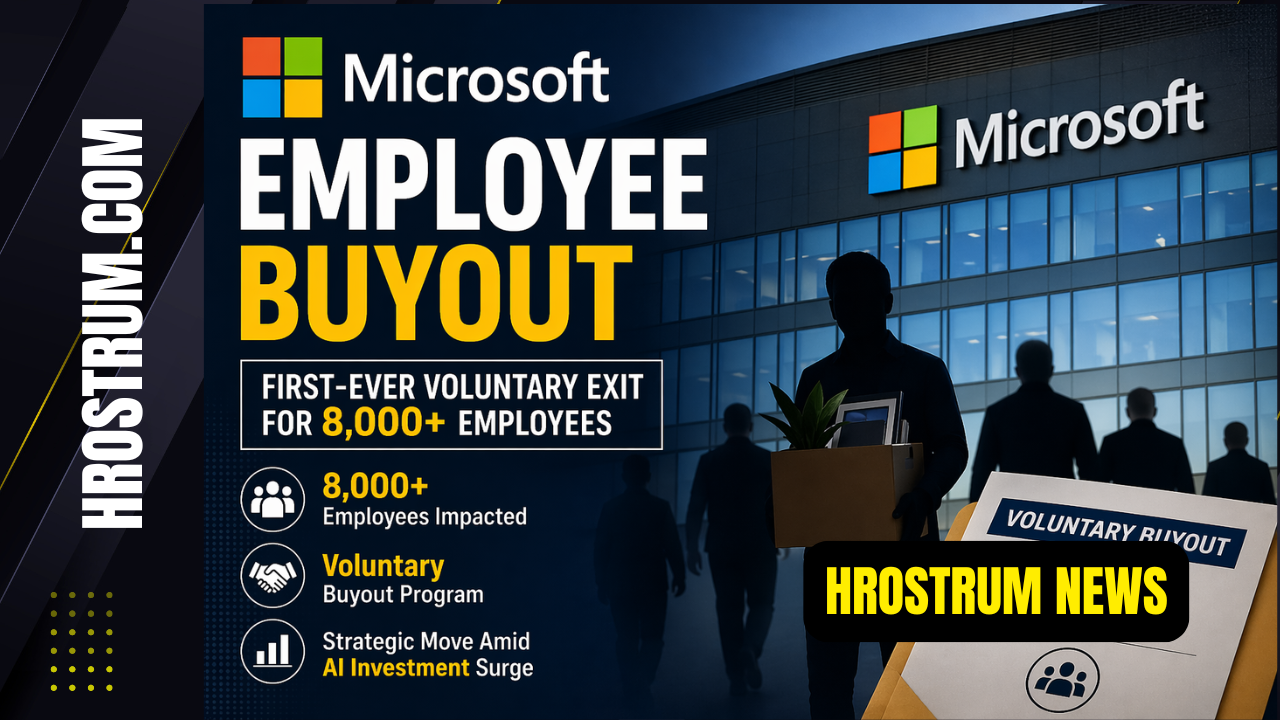
n a rare and closely watched development, the Microsoft employee buyout has been announced as a large-scale voluntary program, potentially impacting over 8,000 employees (≈7% of its U.S. workforce) (Reuters; Bloomberg; The Economic Times, April 2026).”
What makes this particularly notable is that this is the first time in Microsoft’s 51-year history that such a large-scale voluntary exit program has been introduced.
📊 What Exactly Has Been Announced
- A one-time Microsoft employee buyout program structured as a voluntary retirement and exit option for eligible employees.”
- Eligibility limited to:
- Senior director level and below
- Employees whose age + years of service ≥ 70
- Approximately 8,500–8,750 employees could be eligible based on workforce size
- Certain roles, including sales incentive-based employees, are excluded
The program was communicated internally via a memo from Chief People Officer Amy Coleman, stating that the goal is to allow employees to “transition on their own terms with support.”
🧠 What Else Is Happening Alongside This
This is not an isolated move. It comes with parallel internal changes:
- Microsoft is revising its compensation structure, including how stock rewards are allocated
- Performance and reward systems are being simplified, reducing complexity in evaluation cycles
- The company is simultaneously committing massive capital toward AI, with projected $100B+ investment levels in 2026
At the same time, adoption of key AI products like Microsoft 365 Copilot is still at ~3% of its 450 million user base, indicating that transformation is still underway.
Why This Move Is Being Watched Globally
- It is not a layoff, but also not routine attrition
- It is structured, voluntary, and targeted
- It affects a specific segment of experienced workforce
- It comes alongside massive AI investments and internal restructuring
Even globally, this is being seen as a different way of managing workforce change, compared to the layoffs seen across tech firms.
Why This Matters for India
Microsoft has a significant presence in India across engineering, GCCs, and enterprise delivery, and global workforce decisions typically:
- Influence organizational structuring approaches
- Shape HR policy conversations around voluntary exits vs layoffs
- Impact how large enterprises think about tenured workforce transitions
At the same time, no direct India-specific buyout has been announced as of now.
A simple but important observation:
This is not about how many people are leaving.
It is about how they are being asked to leave.
💬 For HR Leaders:
Is voluntary exit becoming a preferred alternative to layoffs in large organizations?
#HRostrum #Microsoft #VoluntaryBuyout #CorporateHR #FutureOfWork #WorkforceStrategy #HRLeadership
Contribute to HRostrumHR
Have a perspective on HR, leadership, talent, or the future of work that the world should hear?
HROstrum welcomes HR leaders, CXOs, and industry experts to share their voice and influence the next wave of people strategy.
Submit your articles at editor@hrostrum.com and become part of our expanding network of industry changemakers.
🔗 Follow HRostrum on LinkedIn
🔗 Read related articles here