
📰 EDITOR’S DESK | HROSTRUM.COM
“We are in danger of forgetting that human beings hire human beings—not algorithms.”
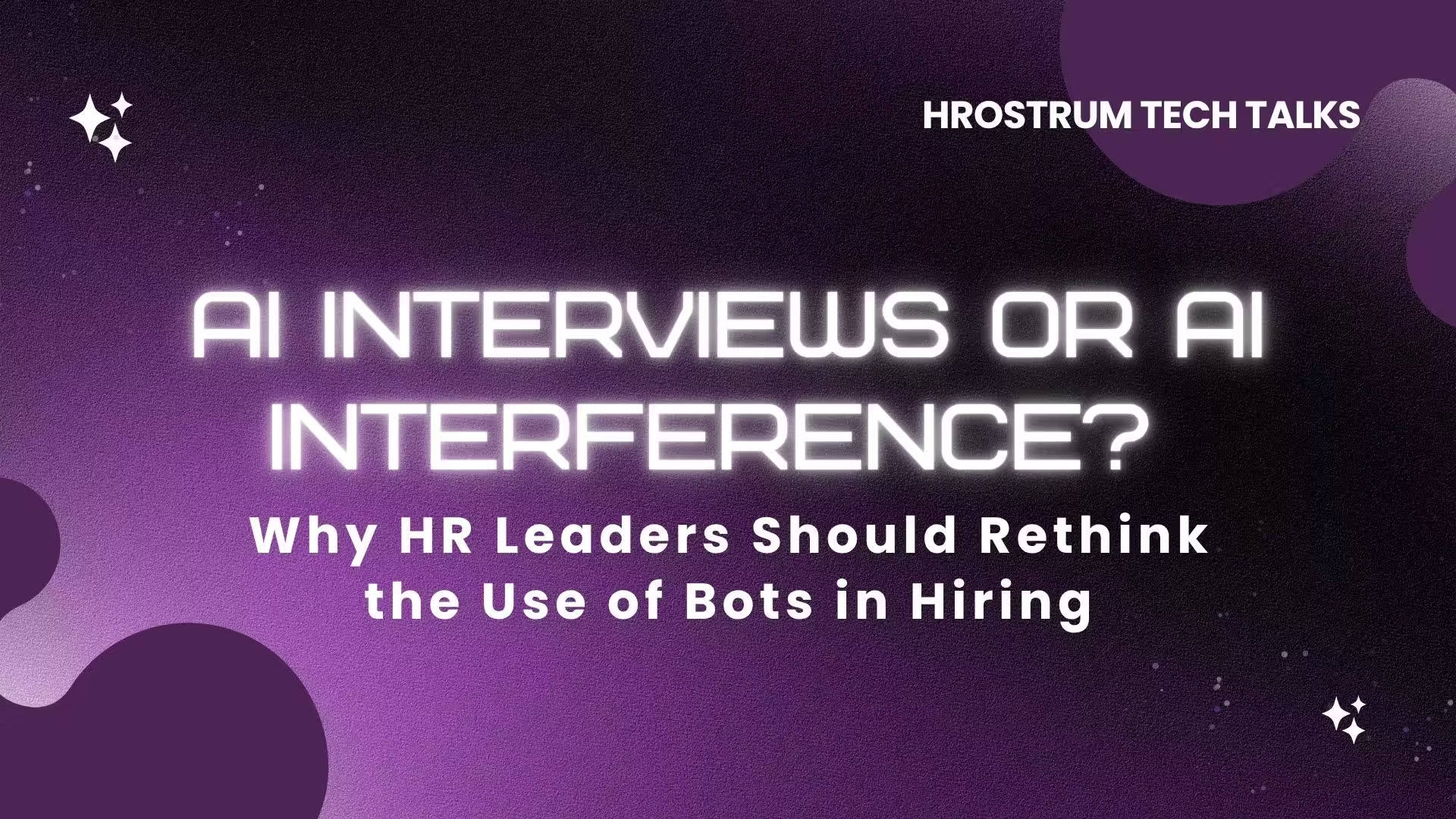
The HR technology landscape is advancing faster than ever, with AI interview bots in HR promising to revolutionize everything from talent acquisition to performance management. Yet, as we celebrate these breakthroughs, it’s worth pausing to ask: Where should AI interview bots in HR augment—and where might they overstep?
One recent trend catching global attention is the use of AI interview bots in HR to conduct first-round interviews. These bots claim to save recruiter time, improve consistency, and even spot hidden talent through sentiment analysis and NLP (Natural Language Processing).
But real-world experiences suggest a different story.
🧩 When AI Misses the Human Puzzle
Imagine a candidate using humor to ease interview nerves—only to find the AI scoring them as “irrelevant” or “unfocused.”
Or a candidate with a regional accent being misunderstood by the bot’s speech recognition engine.
Or a neurodiverse applicant who struggles with eye contact being penalized by facial analysis algorithms.
These aren’t isolated hypotheticals. HR professionals worldwide are reporting that while AI bots excel at scheduling, parsing resumes, and assessing technical answers, they fail at context, nuance, and empathy—the core of human communication.
📊 Why It Matters
At first glance, automating interviews seems efficient:
- Faster processing of large candidate pools
- Standardized question delivery
- Immediate scoring
But when these tools evaluate emotional intelligence, cultural fit, or creativity—their reliability crumbles. Worse, biases can get baked in through poorly trained models or incomplete datasets, turning tech that should help us into something that quietly harms diversity and inclusion.
🔍 The Role HR Must Play
As custodians of organizational culture and fairness, HR leaders face a choice:
- Use AI to replace the human touch, or
- Use AI to empower humans to make better, faster, and fairer decisions
The second path is the one most experts now recommend.
✅ Hrostrum’s Take: Best Practices for Using AI in Hiring
| Use AI to… | Avoid using AI to… |
|---|---|
| Automate repetitive admin: scheduling, reminders, parsing resumes | Replace real-time human interviews, especially for cultural fit |
| Provide structured data to support human decisions | Solely determine hiring outcomes |
| Identify patterns in large data sets (e.g., turnover trends) | Analyze subtle human cues (tone, humor, emotion) without oversight |
| Enhance accessibility for neurodiverse candidates (e.g., asynchronous video) | Enforce uniformity that punishes diversity of communication styles |
🧠 The Future: Human-Led, AI-Supported
The promise of AI interview bots in HR isn’t about choosing between bots and humans. It’s about designing systems where AI handles what it does best—data, consistency, speed—while humans handle what only they can: empathy, adaptability, and culture.
The next evolution in HR technology shouldn’t erase the human voice; it should amplify it.
✍️ Join the Conversation
How is your organization using AI interview bots in HR?
Have you faced challenges balancing efficiency with empathy?
Tell us at Hrostrum — because the future of HR isn’t just about technology; it’s about people who use it responsibly.
📌 For more original articles on HR tech, talent strategy, and the future of work, follow Hrostrum.com.
Contribute to HRostrumHR
Would you like to share your insights on HR trends, corporate strategies, or the future of work? We invite HR professionals, business leaders, and industry experts to contribute to HROstrum!
 Send your articles to editor@hrostrum.com and be part of our growing community of thought leaders.
Follow us on LinkedIn
Access similar article here