
📰 TECH TEAM | HROSTRUM.COM
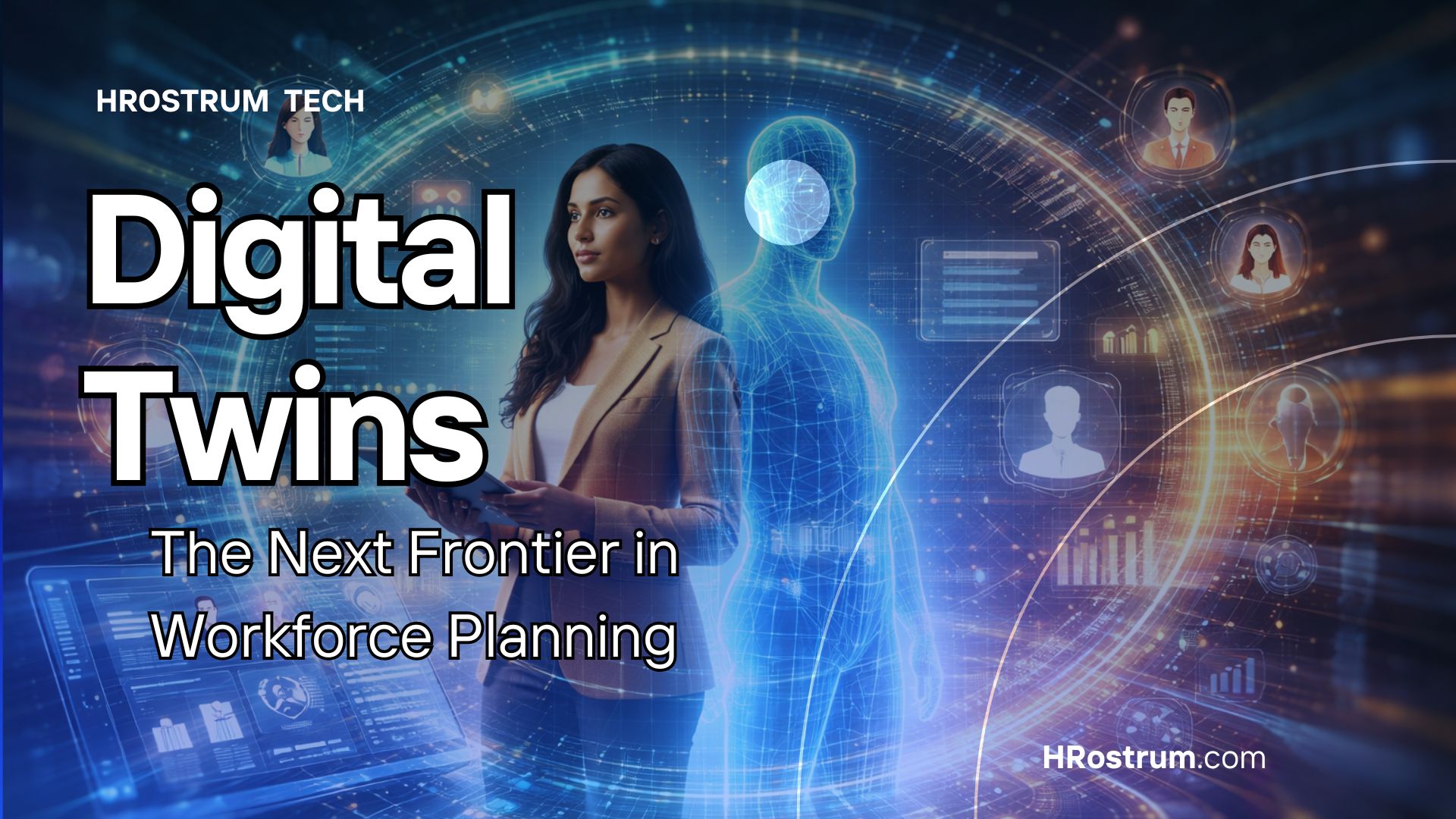
For decades, organizations have planned their workforce using static spreadsheets, historical reports, and intuition. But a new frontier is emerging: digital twin workforce technology — an advanced, data-driven approach to modeling employees, teams, and talent flows in a virtual environment. Originally used in manufacturing, aerospace, and smart cities, digital twins are now inspiring workforce simulation systems that help HR leaders make strategic decisions before events unfold in the real world.
At its core, a digital twin of an employee is a dynamic data model that mirrors how work is actually performed, not just how it should happen on paper. Built from real patterns of interaction, decision-making, performance, and skills data, these models enable organizations to simulate outcomes, test policies, and optimise workforce strategies in a risk-free digital sandbox.
From Headcount Planning to Workforce Simulation
Most workforce planning today answers the question:
“How many people do we need?”
Digital workforce twins go further — they ask:
“What will happen if we restructure teams, shift markets, or reshape skills?”
By simulating different organisational futures, leaders can explore scenarios such as:
- The effect of large-scale reskilling programs
- How hybrid work patterns change collaboration flows
- Workforce resilience under rapid market shifts
- Potential turnover hotspots before they occur
- Strategic talent redeployment instead of layoffs
This elevates HR from reactive reporting to predictive foresight.
Real-World Examples & Emerging Use
While fully mature digital twin HR systems are still early stage, several verified cases and vendor experiments are already underway:
🔹 Siemens – Already a leader in industrial digital twins, Siemens has reportedly extended this thinking to workforce modelling in engineering divisions, allowing HR to test staffing and organisational scenarios virtually rather than empirically.
🔹 Modern HR platforms – Vendors like Beamery are discussing the idea of “Digital Twin Organisations” —connected models of workforce structure, skills use, and work outcomes that help simulate organisational change.
🔹 Automation combines with twin logic – For example, automation platforms are working with HR teams to simulate processes like onboarding or reporting to help accelerate and optimise workflows before implementation.
🔹 Research & tools – Thought leaders and analysts highlight prototypes and internal pilot systems that build digital employee avatars for productivity insights and collaboration modelling.
However, it’s important to note that most real corporate applications today are hybrids: advanced workforce analytics, simulation engines, and predictive planning platforms used in concert rather than fully branded digital twin HR products. The ecosystem is evolving rapidly as data integration and organisational intelligence technologies improve.
The Indian Context: Capability, Innovation & Convergence
In India, digital twin adoption is visible across sectors — even if workforce twins are still nascent:
• Technology hubs & talent supply: India is rapidly becoming a digital innovation centre for global companies. For example, Chevron expanded its Bengaluru engineering hub to enhance digital modelling capabilities, including industrial digital twin systems — underscoring how India’s workforce and tech talent are central to global digital transformation strategies.
• Skills & HR analytics education: Institutes such as IIT Madras Pravartak are launching AI-enabled HR analytics programmes to prepare HR professionals for data-driven talent strategy roles, laying the groundwork for future adoption of sophisticated models like digital twins.
• Digital twin capability providers: India has strong digital engineering and integration firms (e.g., Infosys, Wipro, Tech Mahindra) building digital twin systems for manufacturing, infrastructure, and IoT ecosystems. While these companies aren’t yet selling HR digital twin products, their digital-model expertise and data engineering capabilities are essential building blocks for future workforce simulation tools.
• HR tech ecosystem: Indian platforms like skill-analytics and learning companies (e.g., Disprz) already emphasise employee capability mapping and predictive career pathways — core elements that feed future digital twin logic.
A Shift from Monitoring to Human-Centred Planning
A critical differentiator for ethical digital twin adoption in HR is how organisations implement them:
- Not for surveillance: The goal is not to monitor every action but to understand patterns at scale, model outcomes, and support better work design.
- Focus on resilience and well-being: Twin simulations can reveal workload imbalances or burnout risk before they become real organisational problems.
- Transparent governance: Organisations must establish clear policies on data use, consent, and privacy before leveraging detailed workforce models.
The Road Ahead
Digital twins are already reshaping sectors like manufacturing and energy worldwide. Their application in HR is still emerging, but the trajectory is clear: toward evidence-based, scenario-driven people decision making, not administrative HR tasks.
HR leaders in India and globally should begin by building robust data infrastructure, investing in skills analytics, and experimenting with predictive workforce models. Not as a futuristic proposition — but as a strategic imperative: to anticipate change rather than respond to it.
By bridging advanced simulation logic with human insight, digital twin technology could redefine workforce planning for a data-driven future of work.
Contribute to HRostrumHR
Have a perspective on HR, leadership, talent, or the future of work that the world should hear?
HROstrum welcomes HR leaders, CXOs, and industry experts to share their voice and influence the next wave of people strategy.
Submit your articles at editor@hrostrum.com and become part of our expanding network of industry changemakers.
🔗 Follow HRostrum on LinkedIn
🔗 Read related articles here